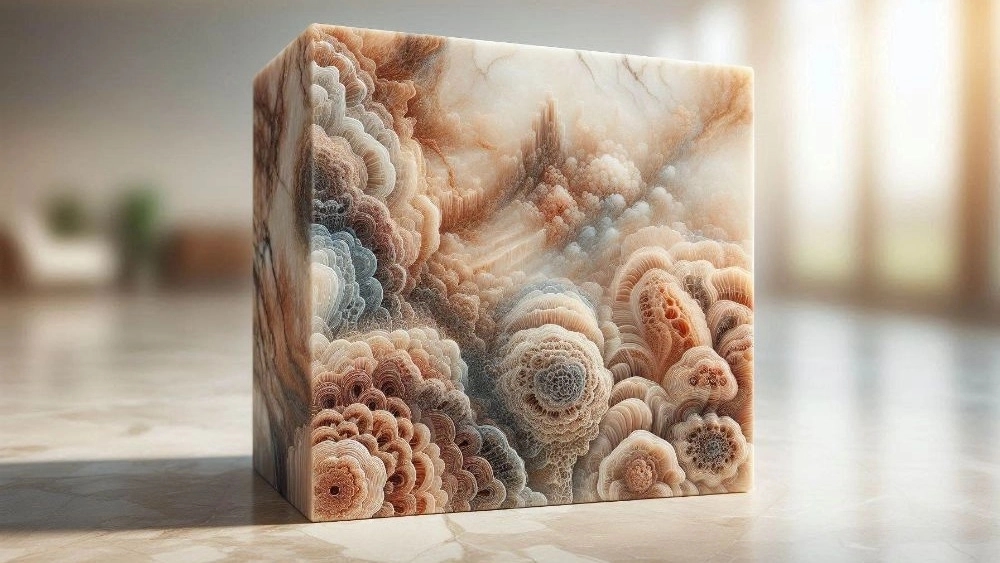
Abbas Abad travertine stone is placed in the category of sedimentary rocks. Abbas Abad travertine stone is available in the market in different color ranges from light to dark. The brighter the rocks are, it means that the sediments that formed the rocks had less solutes. Brighter colors have more customers and therefore have a higher price. Abbas Abad travertine stone is one of the brightest types of travertine stone. This stone also has a very high resistance compared to other types of travertine stones.
Abbas Abad Stone
Travertine stones are used for facades for many reasons, including good adhesion to the wall, low weight, and very high resistance. Abbas Abad stone is one of the stones that has a high degree of quality and beauty compared to other stones, and this distinction made the price of Abbas Abad stone higher than other travertines, although this high price did not cause it to be bought less. All varieties of Abbas Abad stone have beautiful and unique patterns and designs that have no other similarities, and this beautiful pattern has made the fans of this stone increase every day.
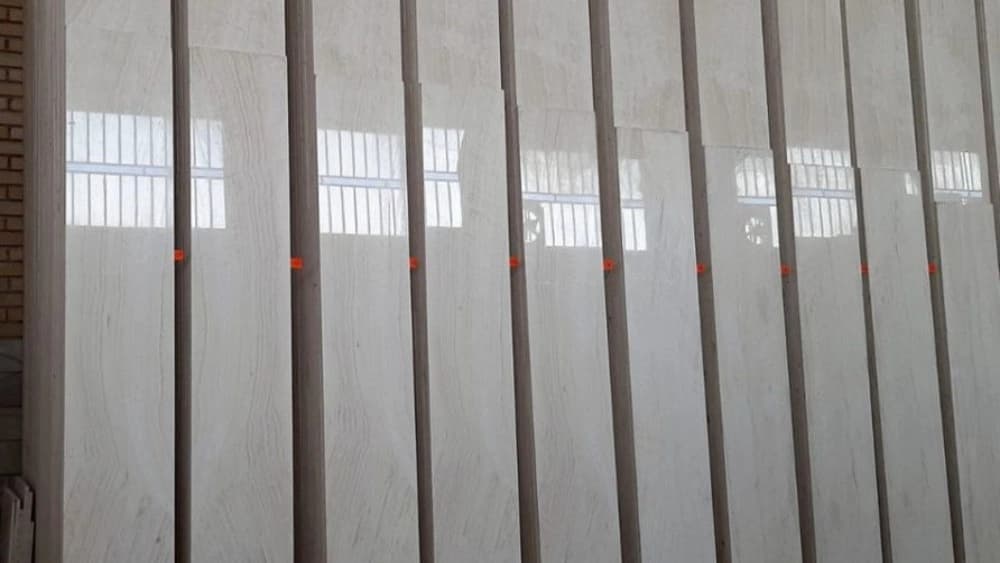
Factors affecting the price of Abbas Abad White Travertine
Size and slices of rock Type and nature of rock Copy extraction costs The type of cutting and processing Surtle Clean and minimum amount of veins in the rock surface Shipping costs
What is a travertine stone?
Travertine is a calcareous stone that comes from the activity of hot springs. The properties of travertine are between marble and limestone, which is naturally found alongside springs, caves, and so on. The sponge surfaces and holes in the travertine surface are due to the release of carbon dioxide during sedimentation and formation of these types of rocks. The presence of air bubbles and impurities of iron, silica, manganese, organic matter, etc. creates a variety of colors such as white, cream, chocolate, gray, red, yellow, etc. in different travertine mines.
Due to the fact that travertine stones have holes in their texture, it is not recommended to use them in places that deal with a lot of moisture and water. Because these holes in the texture of travertine stone, in the vicinity of moisture or water, absorb it. Absorption of water over time causes damage and ultimately destruction of the structure. It is better before using travertine stone in places with high humidity, such as the interior covering of the floor and wall of the bathroom, bathroom and kitchen, or even using it to cover the exterior of the building in areas with heavy rainfall, using resin and other materials. , to be well sealed to minimize the amount of water absorption in it. In order to provide a significant amount of one sort of Abbasabad stone, a lot of time must be spent and a very high tonnage must be cut in order to collect a uniform and similar sort.
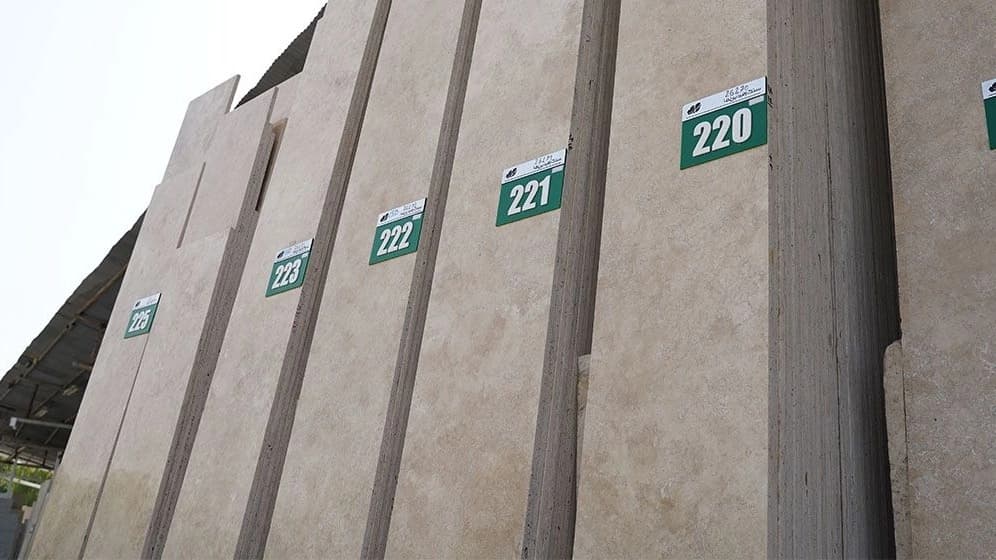
Types of Abbas Abad Travertine Travertine Abbas Abad White Travertine Abbas Abad Light Worm Abbas Abad travertine Travertine Abbas Abad Cloud and Wind Travertine Abbas Abad Cobra Wave Travertine Abbas Abad Travertine Abbas Abad Travertine Abbas Abad Abbas Abbas Abbas Abbas Wave Wave (Cobalt Wave Stone Cutter)
Abbas Abad Travertine Feature:
Very high permeability of Abbas Abad stone The bright whitish color of Abbas Abad stone Beautiful and unique waves of Abbas Abad stone Resistant to weather conditions (cold, heat, sunlight) Good adhesion of mortar with Abbas Abad stone Mass production of Abbas Abad stone Abbas Abad travertine stone is cut in wavy and non-wave form and is named depending on the type and design of the stone wave. One of the characteristics of the stone of Abbas Abad is its high surat.
What is the most common use of Abbas Abad's travertine stone?
Abbas Abad travertine stone is the most widely used in building facades due to its mentioned features and having all the properties that a stone should have for a facade. However, Abbasabad travertine stone is also used in artifacts and other parts of the building, including fences, barbecues, stone statues, fireplace stones, various stone vases, etc. Abbasabad stone can also be used in interior walls such as parking lot wall, staircase, lobby, corridors and yard. This stone is used as decoration alone or in combination with other materials. Covering the walls of commercial units and covering the walls are also other uses of this stone.